You have the product.
The commercial system is missing?
I build it.
A great product needs a commercial system to succeed. I build the infrastructure B2B and B2C companies need to bring products to market, sell them and scale efficiently.
0 years · MedTech · Industrial · SaaS · DACH & International
Your product is strong.
The rest isn't keeping up.
The product
doesn't sell itself.
Sales pitches the product, but without a structure, a framework or a clear value proposition, every conversation starts from scratch.
The internal capacity
and know-how aren't there.
The team is good. But no one has the time to build the commercial infrastructure a real launch or expansion requires.
Consultants deliver
presentations. Not systems.
Weeks of analysis. A 60-page report. And then? The deck sits in a folder. The sales process stays the same.
That's not your problem. That's your starting point, and my cue.
The complete picture.
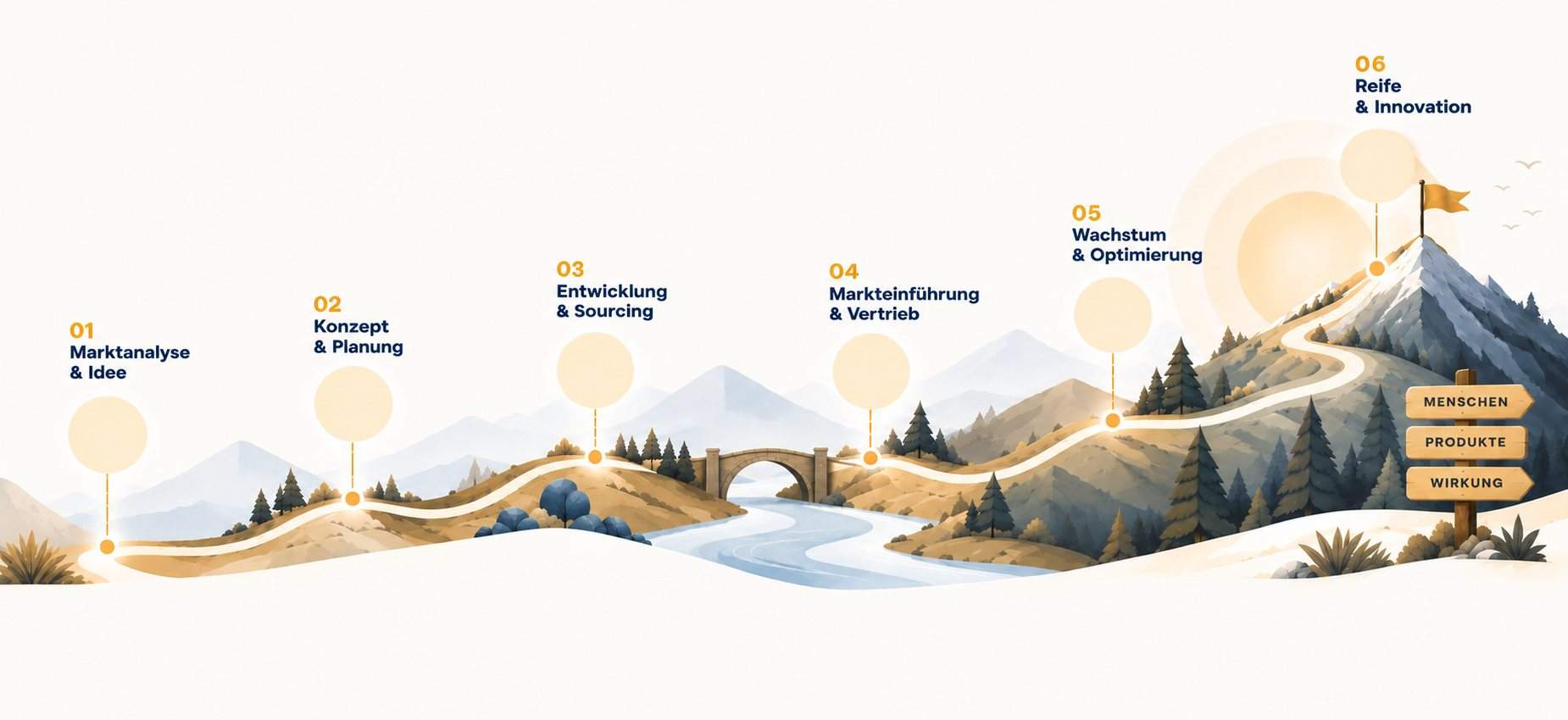
Titel
Beschreibung
Tap a + to see the competencies for each phase.
From clarity to execution.
I analyze what is holding the commercial side back, develop the right structure, and translate it into something your team can actually use.
Depending on the situation, the collaboration ranges from a focused diagnostic to a clearly defined commercial project to temporary work directly inside the team.
I don't deliver slides for the sake of slides. I build commercial structures your team can actually use. I leave something behind that keeps running without me.
Clear offers.
No hourly-rate roulette.
Understand what's holding you back.
Description & what can be included
A focused analysis of your existing commercial setup. I identify where friction arises, what causes it, and which topics have the greatest influence on your further commercial development.
- Preparation and analysis of relevant commercial documents
- structured stakeholder conversations
- Analysis of go-to-market, positioning, sales, pricing, and relevant commercial structures
- Identification of the key structural weaknesses and opportunities
- Prioritization of the five most relevant areas for action
- written commercial diagnosis
- Executive readout and follow-up
I prepare based on the relevant commercial documents, run structured stakeholder conversations, and condense the results into a written diagnosis with clear prioritization and an executive readout.
Note: Travel and accommodation costs for agreed on-site work are covered separately.
Build what's missing.
Description & what can be included
A focused commercial project for companies that want to not just analyze a relevant commercial problem but solve it in a structured way and turn it into a workable basis.
- Go-to-market and commercial architecture
- ICP and customer segmentation
- Positioning and messaging
- Value proposition
- Sales process and sales enablement
- Pricing and ROI logic
- Competitive positioning
- Commercial frameworks and decision bases
Not every sprint includes all points. The specific scope is defined before the project starts, based on the situation and priorities.
Typically a 4–8 week project duration. This describes the project timeline, not continuous full-time capacity.
Analysis and preparation, stakeholder work, development of the agreed commercial structure, iteration, concrete frameworks and commercial assets, plus workshops or working sessions are combined into a clearly bounded project.
Note: Travel and accommodation costs for agreed on-site work are covered separately.
Execute until it sticks.
Description & what can be included
Temporary senior commercial expertise directly inside the company. For situations that need not just a recommendation but additional experience, structure, and execution power in the day-to-day business.
- full embedding in relevant teams and workstreams
- Diagnosis and prioritization at the start of the mandate
- Building and developing the commercial structure
- Go-to-market, sales, pricing, or positioning work according to the agreed mandate
- Development of concrete frameworks and commercial assets
- Stakeholder alignment and working sessions
- Execution together with the team
- Training, enablement, and structured handover
60–90 agreed working days. A full working day covers up to 8 hours.
I work closely with the relevant teams and stakeholders over a defined period, combining strategic commercial work with concrete execution.
Note: Travel and accommodation costs for agreed on-site work are covered separately.
Which model fits?
Diagnostic when you first need clarity on where the actual commercial problem lies and what should be prioritized.
Sprint when the problem is already clear enough and a concrete commercial structure, solution, or working basis should be developed from it.
Embedded when, in addition to strategy, senior capacity is needed over a longer period for execution, anchoring, and enablement inside the company.
Your project doesn't fit any of these categories?
Custom offer on request: workshop, advisory retainer, language versions, short-term engagement.
Four steps. No detours.
Understand
I learn your product, your market and your people. Interviews, data and an honest diagnosis, all within the first week.
Design
Strategy, prioritization and system architecture. What comes first, why it matters and how we get to the outcome.
Build
Execution. I build the tools, frameworks and documents with your team, not over their heads.
Transfer
Training, workshops and documentation. The system runs without me. That's been the goal from day one.
No overengineered onboarding plan. I just need access to the right people and data.
Why work with me.
I started working at 17, cleaning at a car dealership to fund an au pair year in Boston. At the time, hardly anyone believed I'd actually go. I did. That experience shaped much of what came after: the confidence that when I decide to do something, I follow through, even when circumstances aren't in my favor.
Nearly two decades later, I've built commercial systems across consumer goods, IT consulting, MedTech, pharma, SaaS, and industrial automation. Not because there was a predefined box for my profile, but because I see what's missing and build it before someone has to ask.
I've built teams, structures, roles, and cross-functional ways of working, both in smaller companies and global matrix organizations. I've led directly and across functional boundaries. I've also been closely involved in hiring and trained to identify and select the right candidates.

What you want to know.
What does a Commercial Architect do?
A Commercial Architect is a product management expert who takes a 360-degree view of product management: from the product to sales, trade show presence, and reviews of sales conversations, to value communication, websites, catalogs, and eCl@ss, as well as business cases, process optimization, launches, project methodology, or team collaboration. She analyzes why a product is not performing to its commercial potential and then builds the finished, ready-to-use system that is missing: sales frameworks, ROI calculators, pricing models, and competitive analyses. Practical and ready to implement. All deliverables are reviewed and approved together before they are put into use.
How does this differ from traditional management consulting?
Traditional consulting often focuses on analysis and recommendations. My approach goes further: as an Embedded Commercial Architect, I work as part of the team, build the required system, support its implementation, and hand over solutions that can be used immediately. The focus is on practical, ready-to-use deliverables rather than recommendations alone.
Why Commercial Architect? And how does that differ from technical product management?
I am a product manager with a commercial focus. "Commercial Architect" describes how I work: I build the commercial structure around a product, much like an architect designs a house where every room has its place and everything fits together.
To do this, I work across departments and understand the functions a product depends on: sales, marketing, MarCom, performance marketing, research and development (R&D), software engineering, procurement, regulatory affairs, quality management, service, logistics, and ERP systems. I have learned how these functions interact and have worked in some of these areas myself, particularly in upstream marketing. This gives me a clear understanding of what each department needs to help a product succeed in the market.
A technical product manager typically comes from an engineering background and focuses on the product itself: features, roadmap, and quality. Upstream marketing is rarely part of that background, and experience in communicating customer value is often limited. What drives customers? What motivates them? What are their pain points? This is exactly where I focus my work: close to the customer. I step in where the technical work ends, or work alongside the team to build the entire commercial setup around the product.
In practice, this means reviewing ERP data for completeness and accuracy, developing value propositions based on technical features, refining the language used on websites and in marketing materials, and building a sales system that clearly communicates what the product actually delivers to customers. When a prototype is available, I get involved early to assess its commercial viability, working with potential customers, key users, or internal stakeholders, depending on the product. Feedback is then shared with the team in a structured way or jointly evaluated and prioritized.
Technical product managers are often driven by technology and quality. But that alone is not enough. B2B decision-makers think in different terms: reduced downtime, measurable cost savings, patient safety, and workflow efficiency. I translate technical excellence into language that resonates with customers.
What is the difference from a permanent Head of Marketing?
There is no 3–6 month onboarding runway, fixed salary, employment overhead, or notice period. The focus is on a clearly defined scope within a defined timeframe, with a system that the internal team can continue to operate independently. For phases such as a launch, relaunch, or the development of commercial infrastructure, this can provide a flexible alternative to a permanent hire. Depending on the organization, a Head of Marketing role may also have a more narrowly defined remit, whereas my work can span a broader range of commercial topics.
Which companies benefit from working together?
B2B and B2C companies, for example in MedTech, industrial sectors, or SaaS, typically with 30–500 employees, that have a strong product but whose commercial infrastructure has not kept pace with their growth. In larger corporate structures, an independent business unit with efficient decision-making processes is ideal, as lengthy approval processes can slow down commercial transformation. Before a project begins, I assess current workloads and ongoing initiatives so that priorities can be set realistically.
How quickly can an engagement start?
After an initial call and scope discussion, typically within 1–2 weeks. I do not run multiple full-scope projects in parallel, so availability depends on current commitments. If capacity is limited, we can agree on a realistic start date and define what can be prepared in advance.
Is international collaboration possible?
Yes. I work with companies both domestically and internationally, at local and global level. The collaboration model is adapted to the project, team structure, and location.
Remote or on-site — how does collaboration work?
Both. The Commercial Sprint is primarily remote, with defined on-site workshop days. The Embedded Partnership model is remote-first, with regular on-site days depending on the project and location. Travel and accommodation costs for on-site work are covered by the client and are not included in the project fee. The level of engagement is tailored to the project, typically ranging from 30% to 70% depending on complexity, urgency, and available capacity.
Is it possible to start with a smaller budget?
Yes. The Commercial Diagnostic (CHF 5'500) is designed for exactly that: a focused assessment of the current commercial setup, with clear priorities and recommendations for next steps. It is intentionally designed as an accessible entry point before committing to a larger engagement.
Is there experience with patents, trademarks, and IP?
Yes. As part of nomenclature development and product positioning, I systematically review existing trademarks and relevant patents to identify potential conflicts early and support commercial viability. Where required, this is done in close collaboration with the internal Legal or IP team. If access to paid research databases is available, these can be used; otherwise, any additional database costs are quoted separately. The formal registration of trademarks and patents remains with the internal team, as this falls outside my scope.
Is there experience with technical documentation?
Yes. Technical data sheets, operating manuals, and quick guides are also within my scope. Depending on the product and regulatory requirements, I can develop, review, and structure the content in collaboration with the relevant internal teams.
Is support available for design and product videos?
Yes, in both areas. For straightforward to mid-level design tasks — such as layouts, marketing materials, and digital assets — I work with established tools such as Photoshop and InDesign. More complex or extensive design work is also possible and may involve an additional fee depending on the requirements and scope. Where an agency relationship already exists, I can support and coordinate the collaboration. If additional graphic design expertise is required, contacts from my established network can be brought in after the need has been assessed and agreed together. For product videos, I develop storyboards, concepts, and creative direction and support the implementation through structured feedback rounds. I do not handle video production directly, but production can be coordinated with internal teams, an external agency, or specialists from my network.
In which languages are materials created and translated?
Materials can be created and translated in German and English. French and Italian versions, for example for French- and Italian-speaking Switzerland, are available through professional external translators. For additional languages, specialists from my network can be brought in where required.
How much internal effort does this require from the team?
That depends on the complexity of the project and the tasks involved. Typically, regular alignment, access to relevant data, and timely approvals are required — in a focused and structured way that does not unnecessarily disrupt day-to-day operations. The expected level of involvement is defined together at the start of the project.
Is collaboration with the sales team required?
For topics such as sales enablement, pricing communication, or CRM setup, direct collaboration with the sales team is essential. For other areas, such as competitive analysis or product positioning, it may not be necessary. The level of involvement is defined based on the focus of each project.
Is direct sales part of the service offering?
No. I do not take on operational sales activities such as cold calling, lead follow-up, direct sales conversations with customers, or complaint management. My focus is on building the strategic and operational foundations that enable sales teams to perform effectively.
Can customized checklists and templates be created for teams?
Yes. Checklists, templates, and other working materials can be tailored to existing requirements and processes, including defined approval workflows where needed.
Can processes for teams be defined and documented?
Yes. Existing processes can be reviewed and optimized, or new processes can be structured and documented from the ground up. The goal is to create clear, practical workflows, responsibilities, and interfaces.
Can a non-disclosure agreement (NDA) be signed?
Yes. A mutual NDA is signed before the project begins. It is provided to you.
Are customized proposals available?
Yes. Not every service or potential project scope can be covered in detail on the website, so proposals can be tailored to specific requirements. An initial conversation can be used to clarify the scope, requirements, and next steps.
Lessons from the field.
Ready to build the right system?
A 30-minute conversation is enough. I listen, ask questions, and we both know if and how we work together.
Get in touch.
No form jungle. Three fields. I reply within 24 hours. During peak periods it may take 2–3 days. Thank you for your patience.
Message received.
I'll be in touch within 24 hours. Promised.